
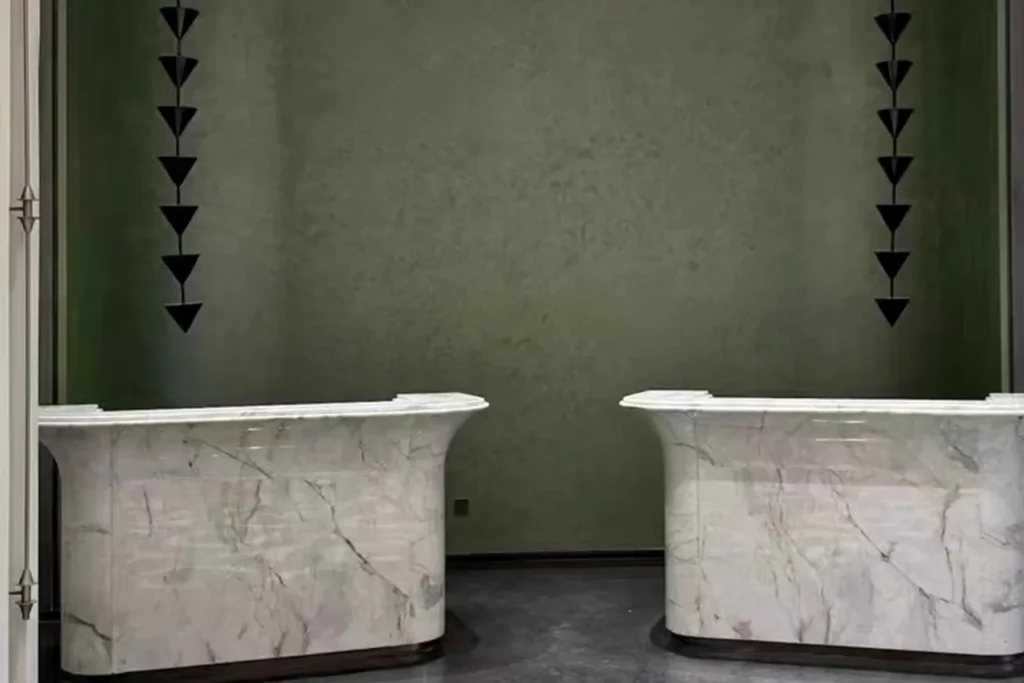
A rendering can show the intended form, but it cannot fully predict how the selected marble will look after cutting. Through this two-counter project, we explain how MarbleFan develops a curved design into a fabrication plan—and what clients should confirm about the actual slabs and the most important display face before production begins.
Two Curved Counters, Two Marble Selections
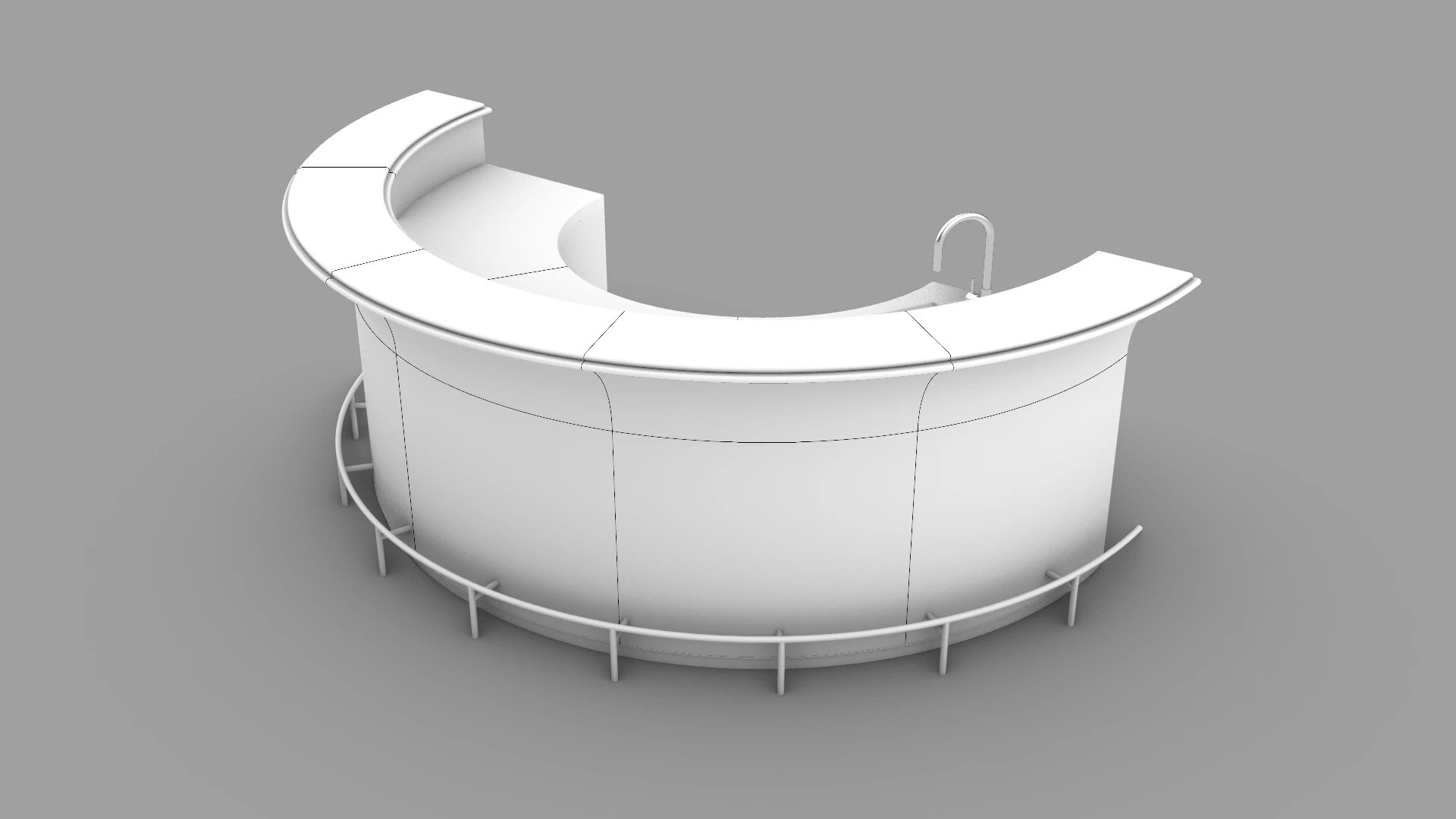
This project involved two curved bar or reception counters with similarly simple, flowing forms. One was produced in Fish Belly White marble and the other in Prada Green marble.
At MarbleFan, our work begins by turning the design drawings into information that can guide fabrication. For these two counters, that meant previewing the form in 3D, separating single-curved and double-curved components, planning the necessary seams, estimating the required stone blocks, and preparing the pieces for cutting and carving.
1. Modeling the Design Before Fabrication
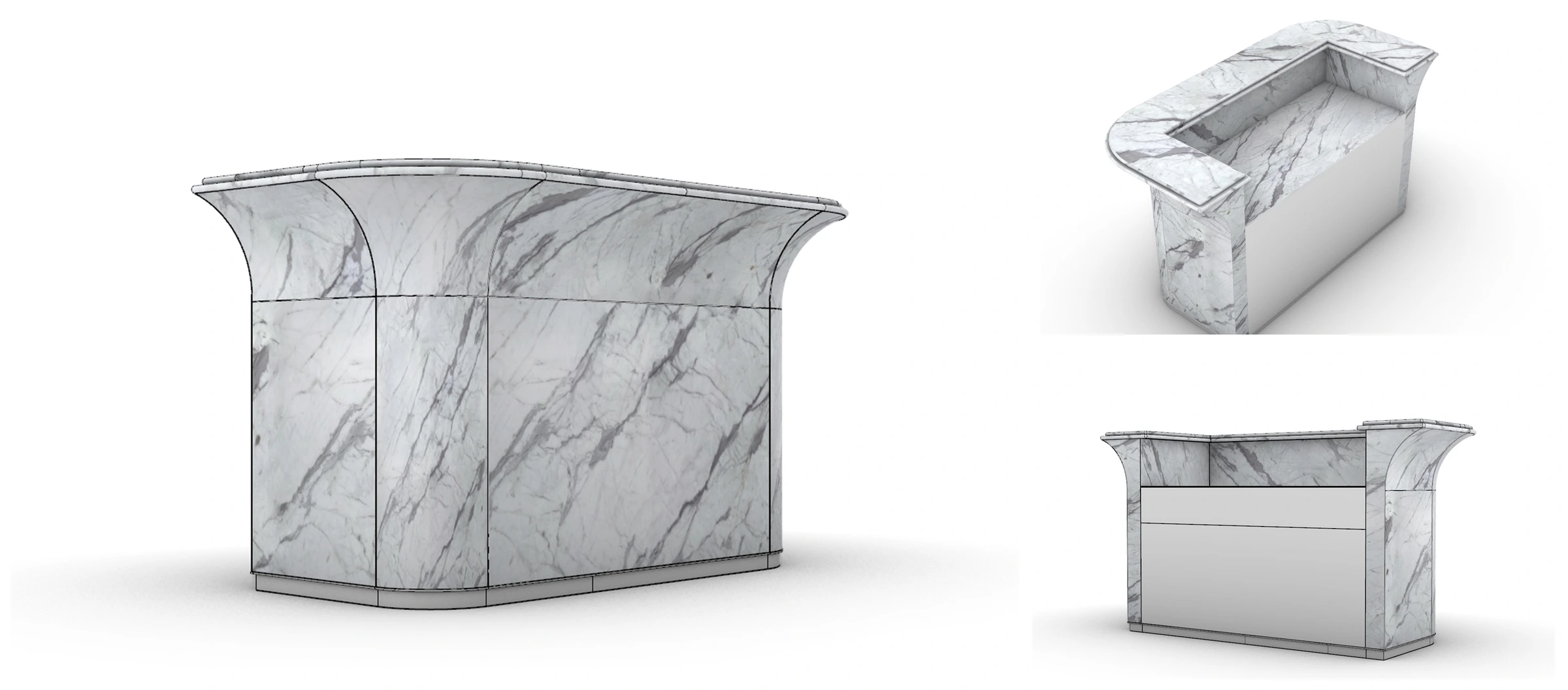
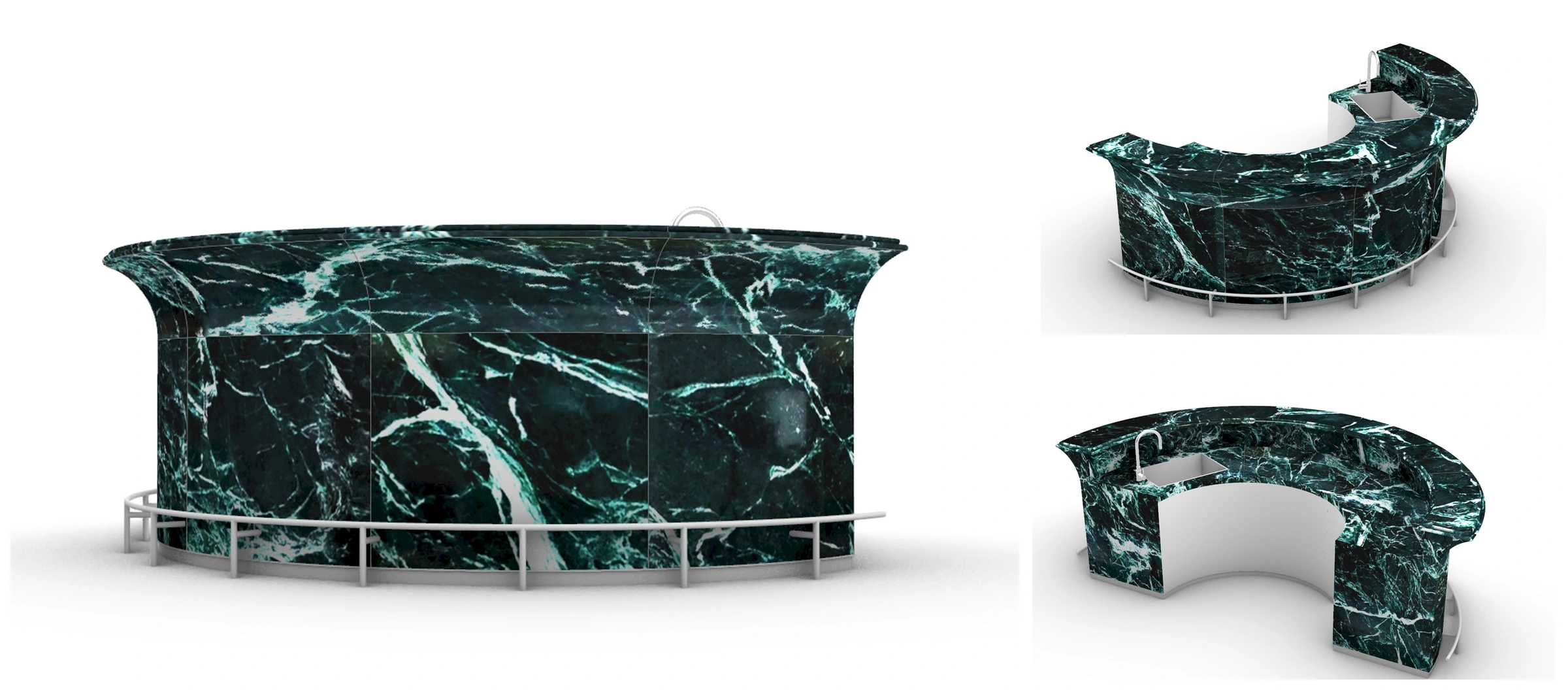
We first built 3D models from the design drawings and used them to preview each counter from several angles.
The models help us examine the overall form before moving into fabrication planning. They also provide a shared visual reference for the Fish Belly White reception counter and the Prada Green bar counter as the designs move from drawings to stone components.
2. Separating Single-Curved and Double-Curved Components
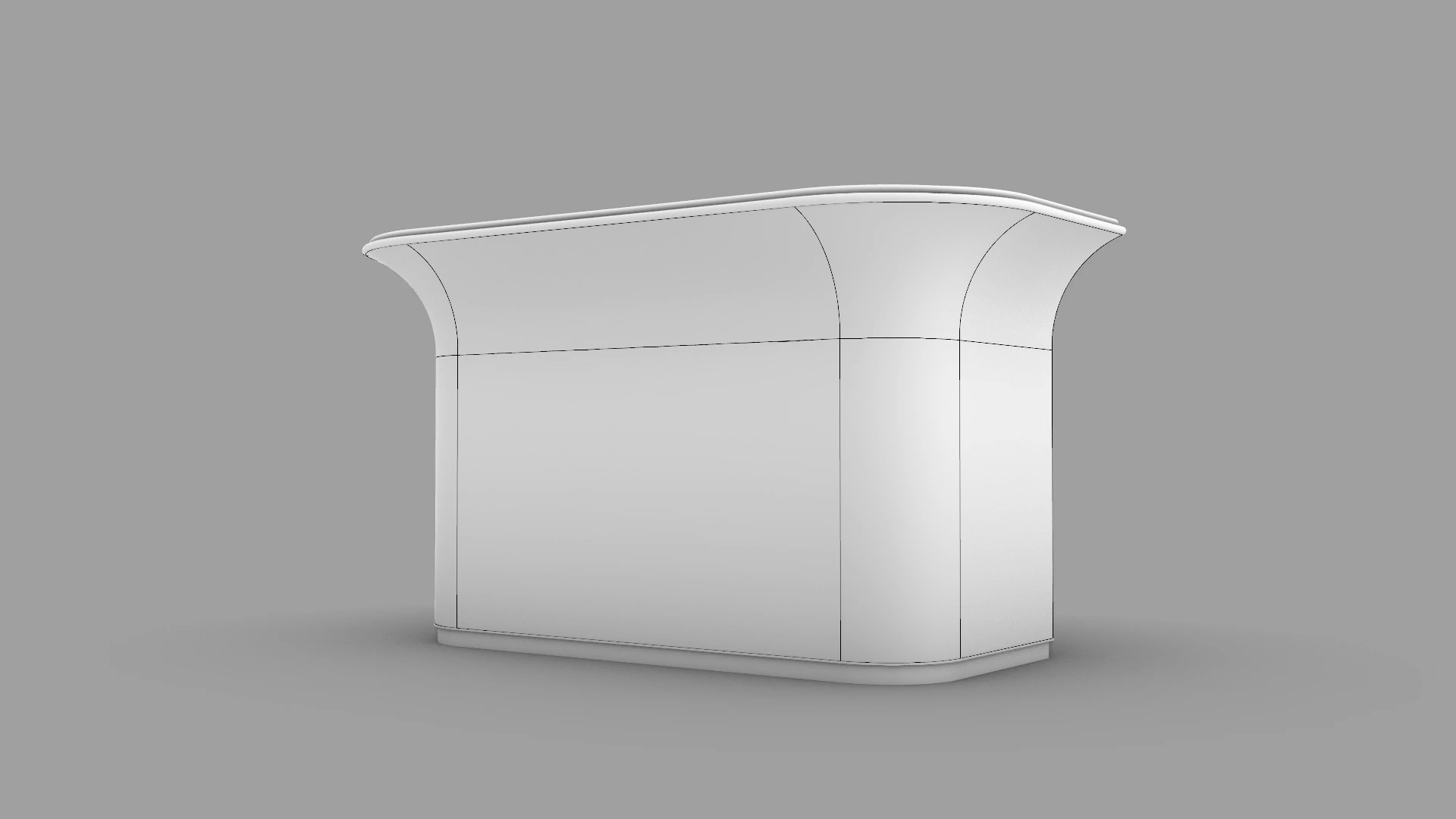
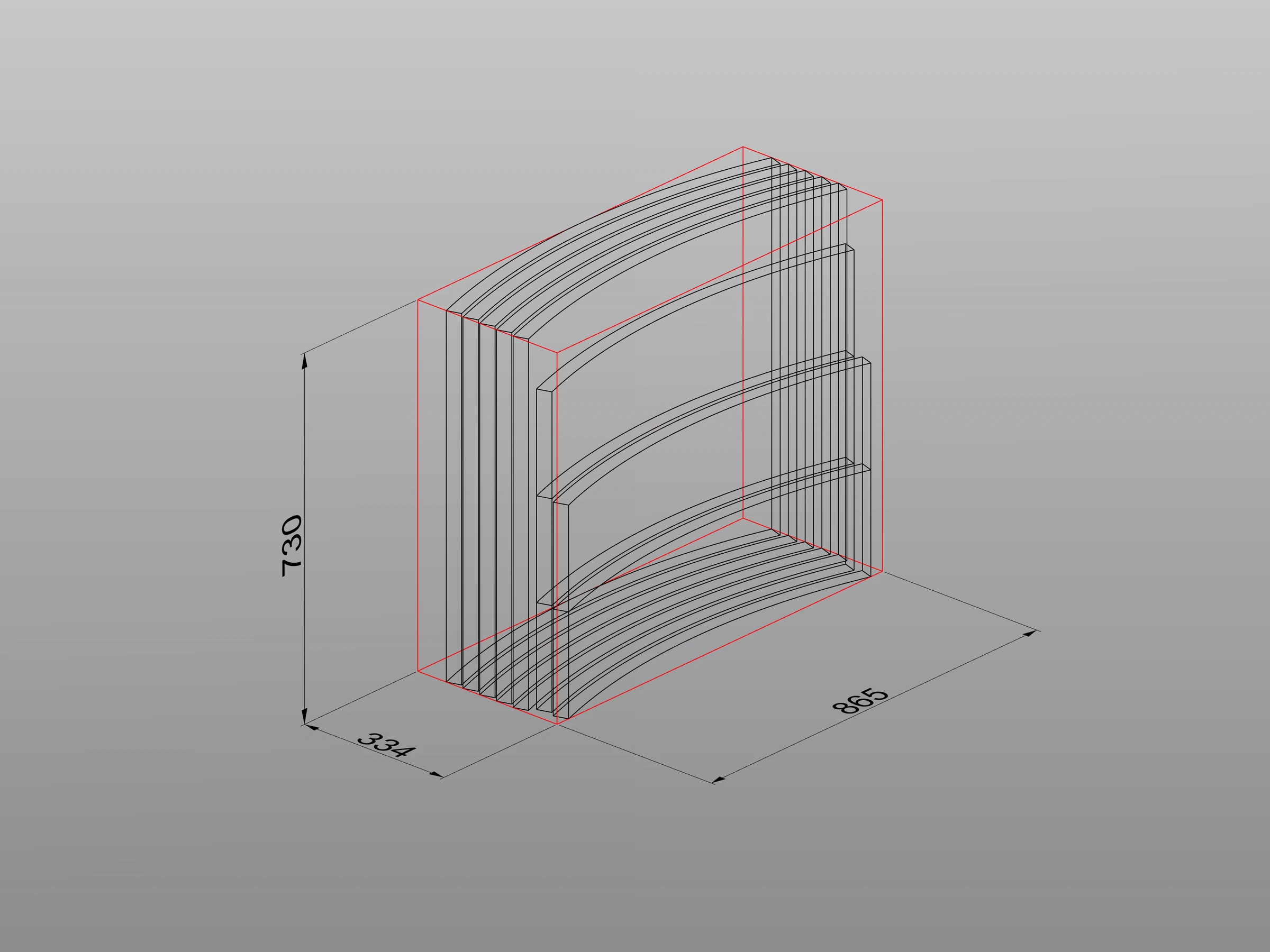
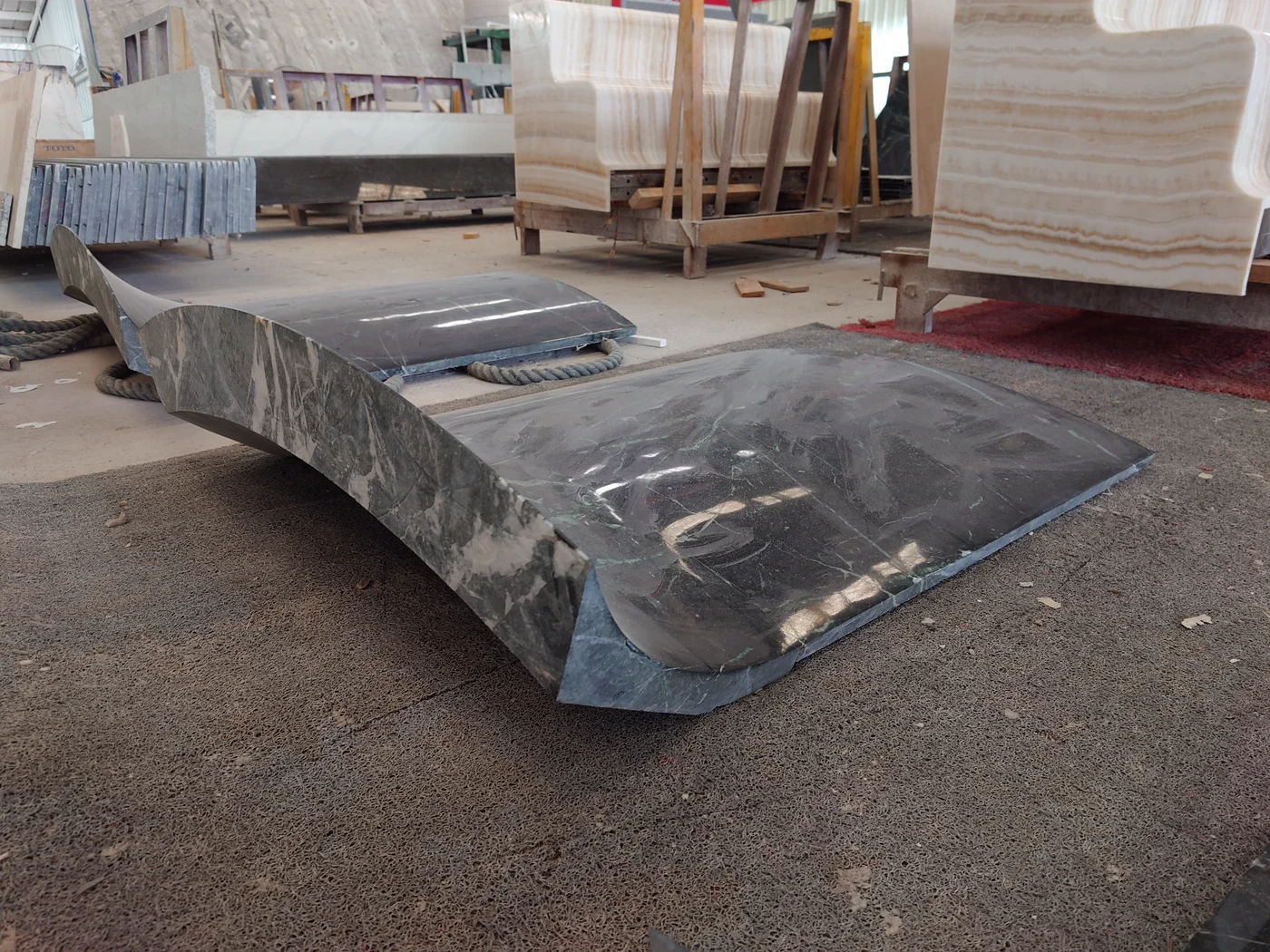
Single-curved and double-curved surfaces require different fabrication approaches, so we identify them before finalizing the seam plan.
We then divide the curved surfaces into balanced sections according to the size of the actual stone slabs. The aim is to place seams only where they are necessary, rather than adding divisions without a fabrication reason.
This step connects the intended form with the real material available for production: the curvature affects how a component is made, while the slab size affects where it can be divided.
3. Estimating Blocks and Preparing Cutting Drawings
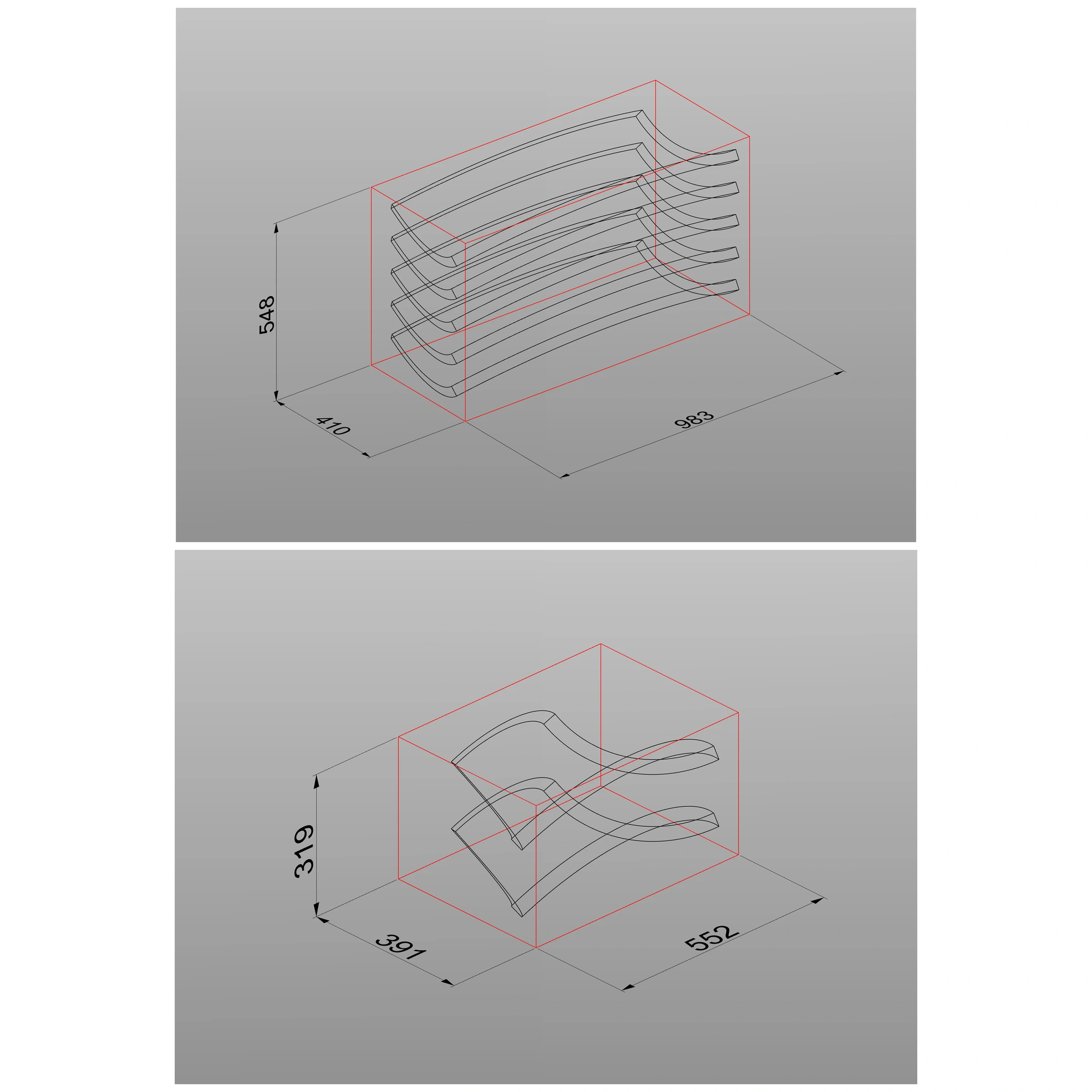
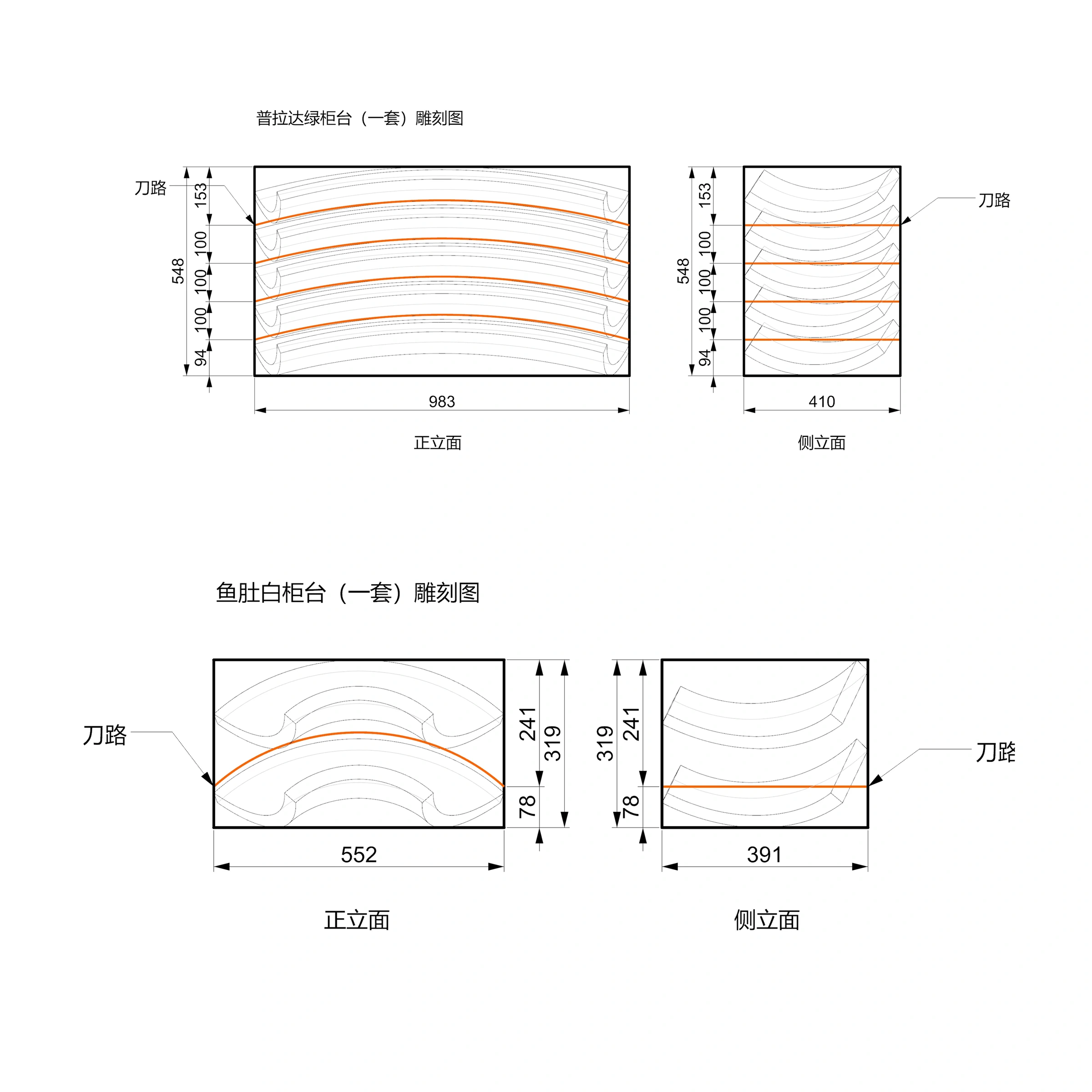
After separating the single-curved and double-curved parts, we estimate the block sizes required for carving. The parts can then be translated into cutting drawings for block preparation and carving.
This is how MarbleFan turns a visual concept into production information: the model defines the form, the curvature classification informs the fabrication method, the seam plan defines the sections, and the block estimates and cutting drawings prepare those sections for the factory.
4. Trial Assembly, Bonding and Water Grinding
For the Fish Belly White counter, the carved curved sections were brought together for trial assembly. The parts were then bonded and water-ground, while the stone layout provided a wider view of how the curved and straight panels related to one another.
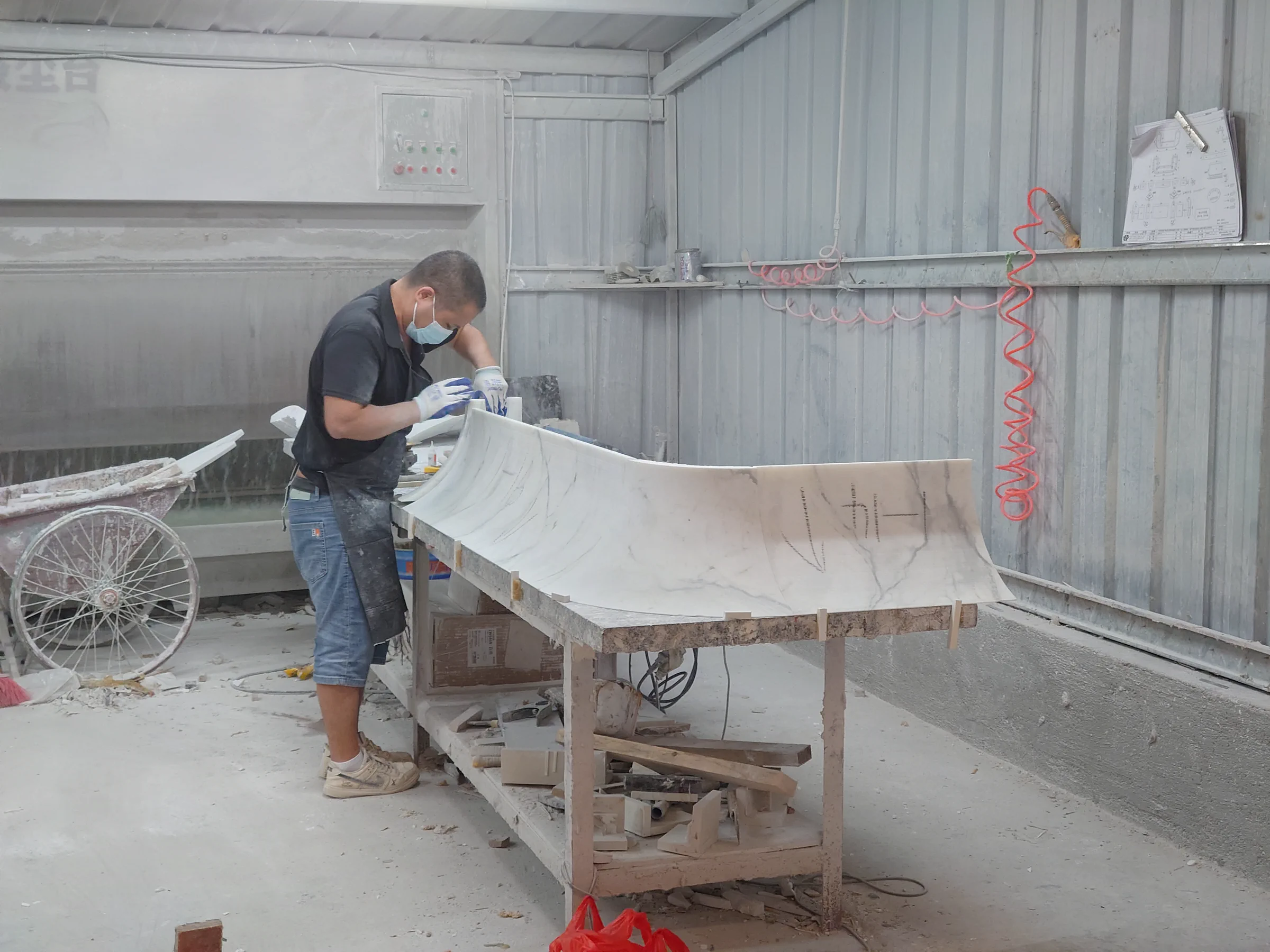
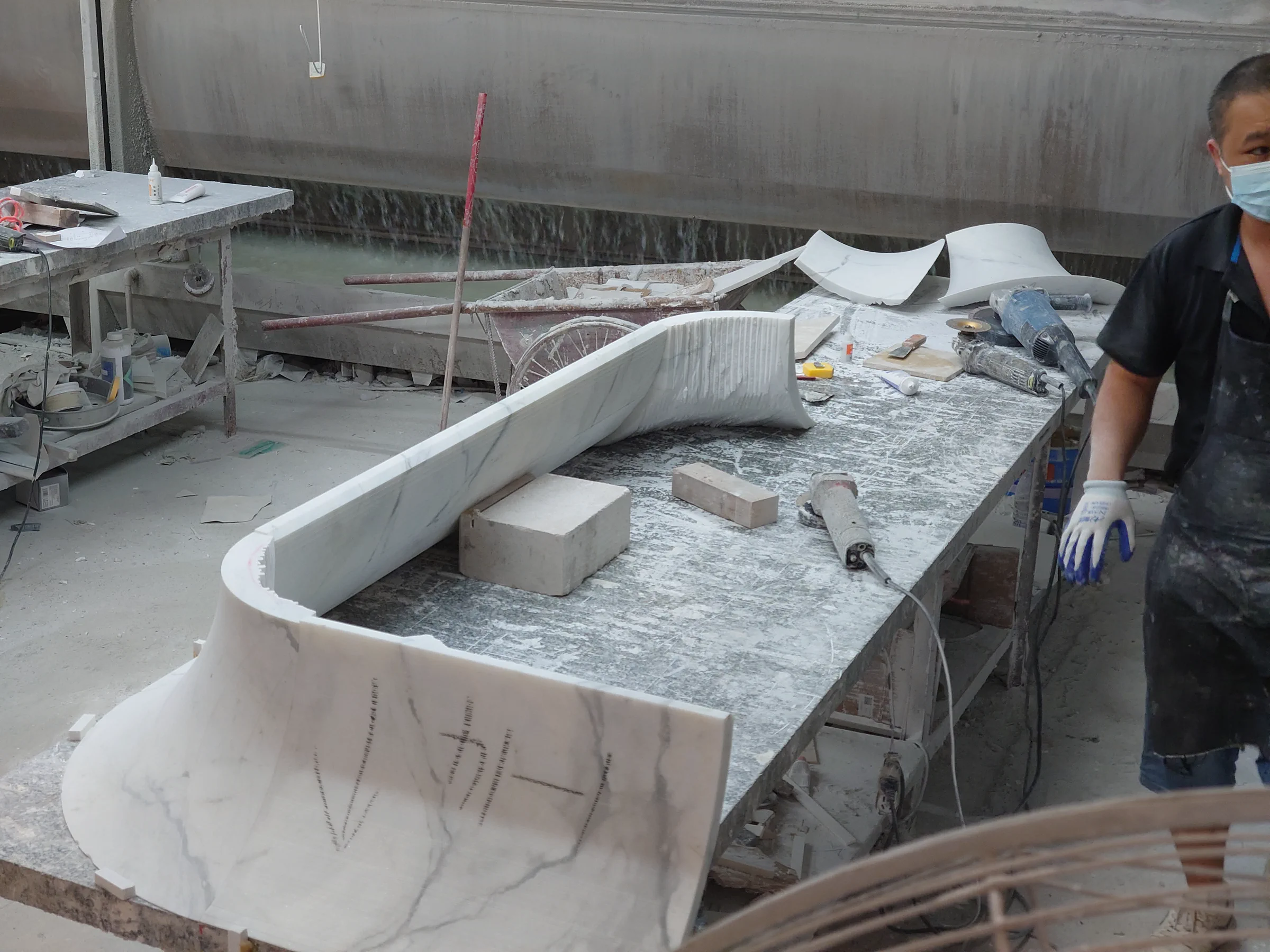
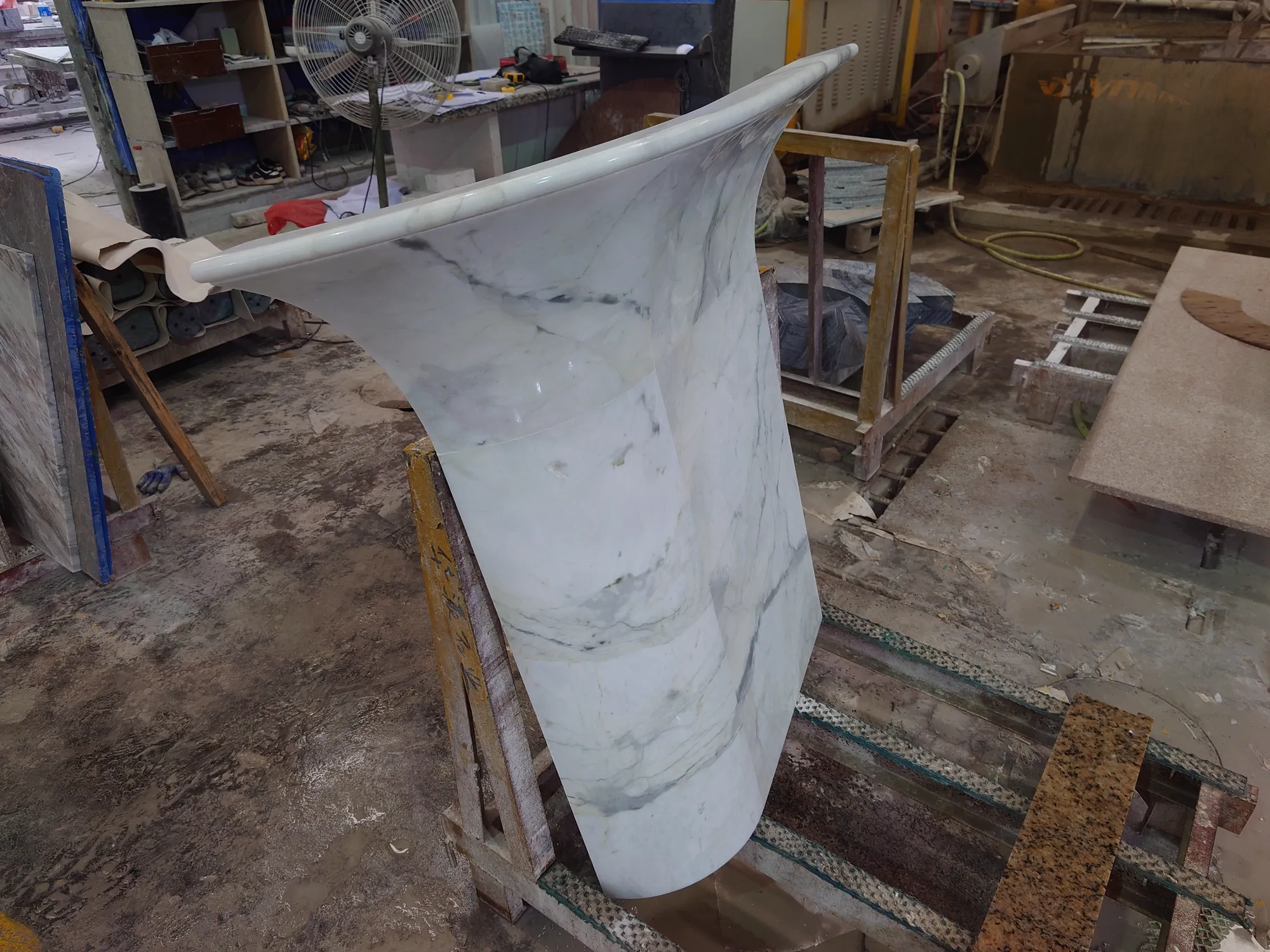
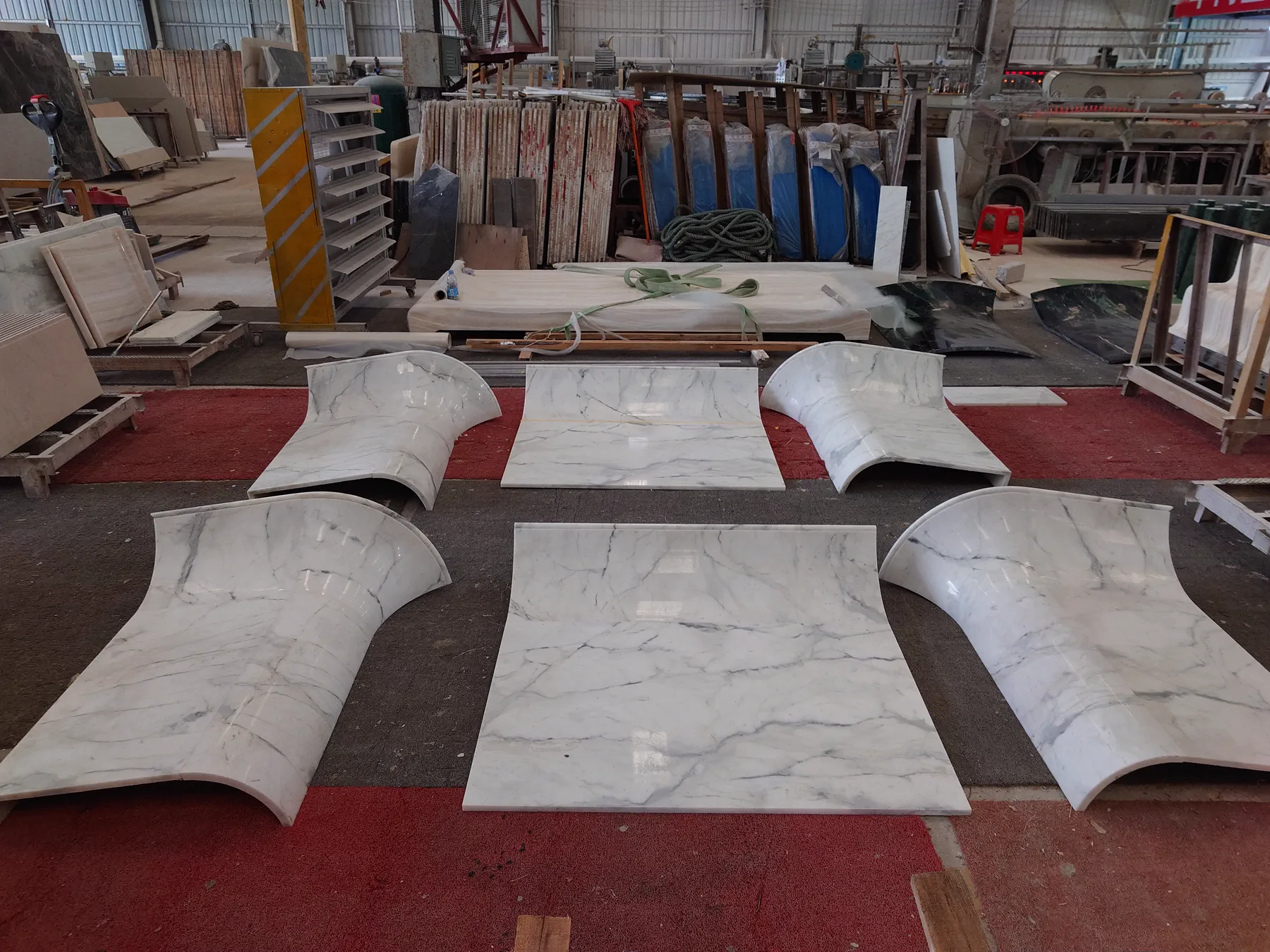
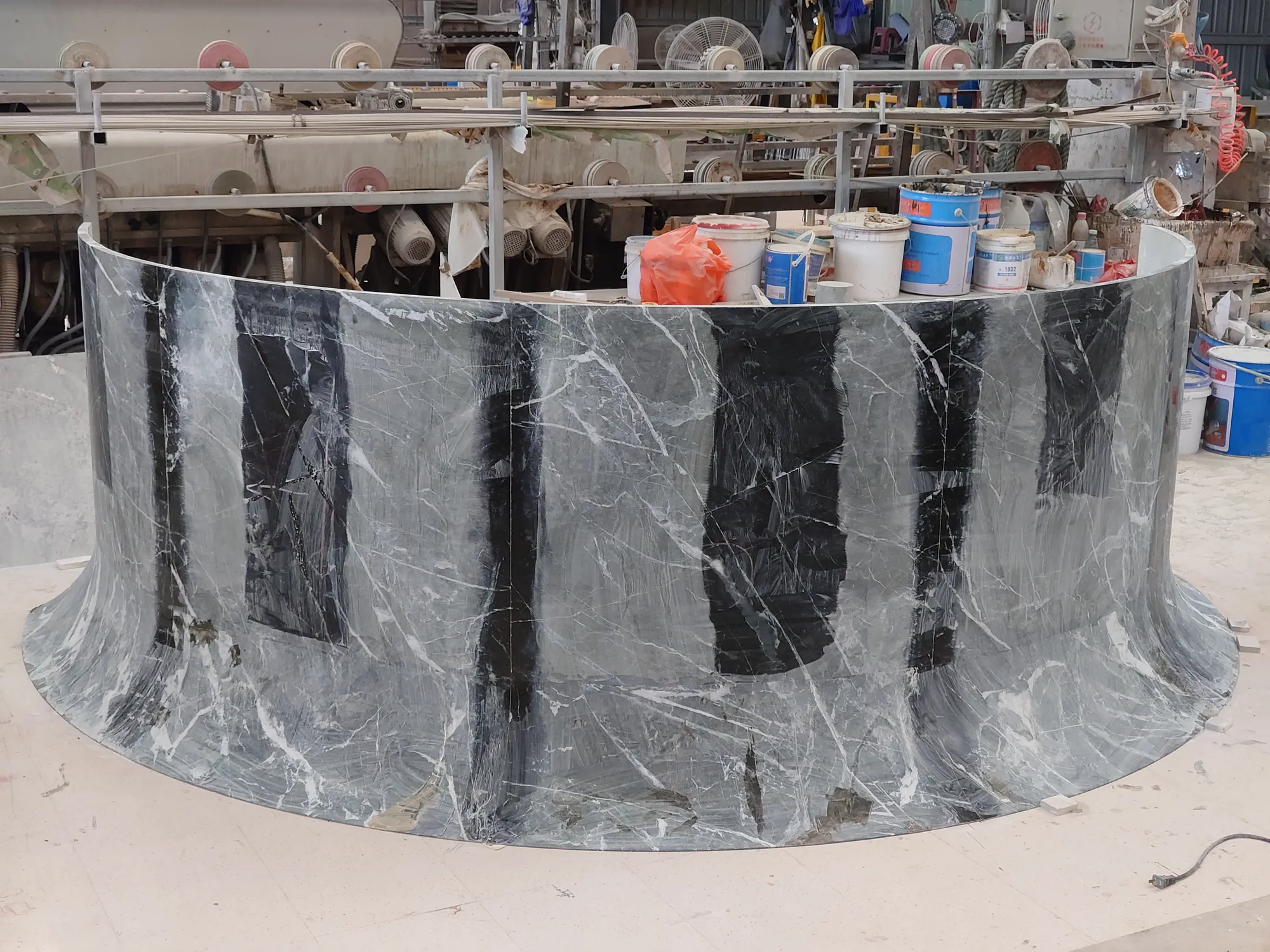
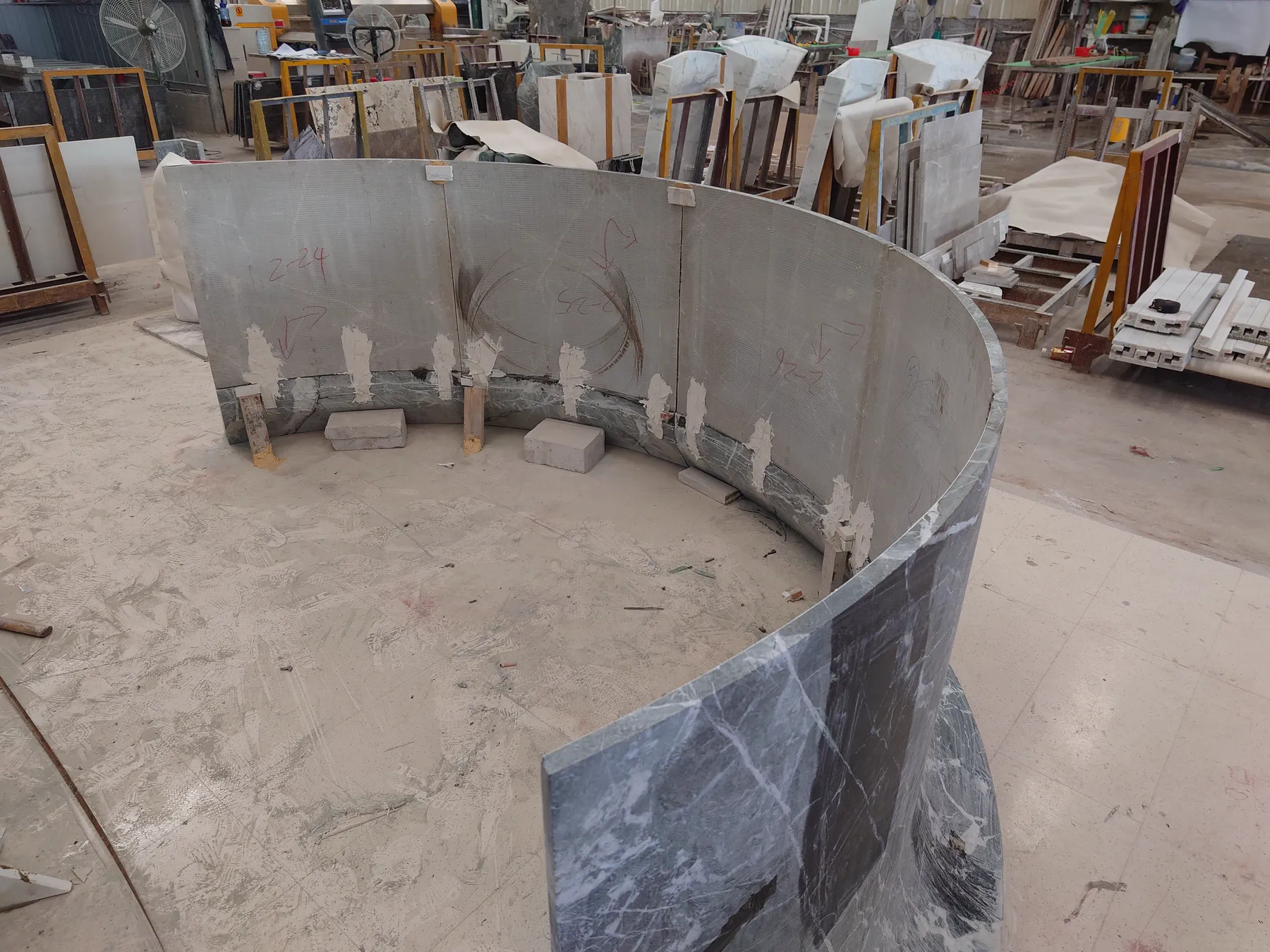
The Prada Green counter followed the same project sequence shown in the factory photographs: the curved pieces were checked in trial assembly and then separated for water grinding.
These checks allow the fabrication team to see how the individual stone components come together before the work reaches its finished form.
5. The Finished Fish Belly White Counters
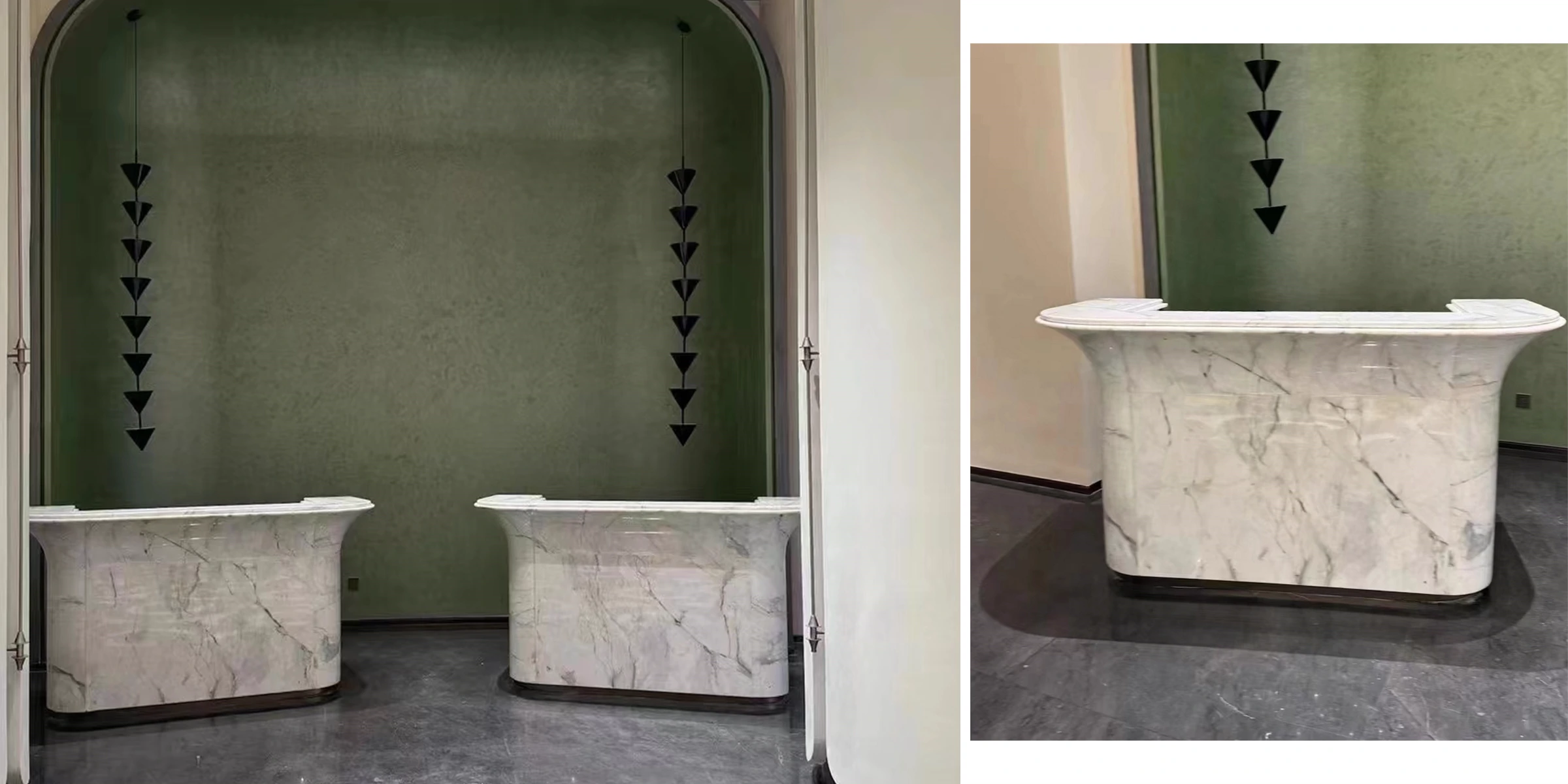
The completed Fish Belly White reception counters show the relationship between the initial design preview, the fabrication breakdown and the installed stonework. The simple curved form remains clear, while the real marble pattern gives each finished counter its individual appearance.
What Clients Should Confirm Before Production
The most important lesson from this project is that a rendering should not be treated as an absolute prediction of the finished marble.
Stone selection is a critical part of custom marble work. Choosing a marble category is only the first step; the actual slabs must also be reviewed. Liking the general character of a stone type does not necessarily mean that every available slab will deliver the same visual result.
In this project, cost limited the material selection from reaching its most ideal visual outcome. Slabs with bolder, more clearly prioritised veining can cost several times more.
Material yield also affects production decisions. A factory will normally consider how efficiently the stone can be used, and saving material may sometimes take priority over the most visually ambitious arrangement. When the budget cannot support an ideal result on every face, clients should identify the display face that matters most to the space and communicate that priority before cutting. Where conditions allow, ask for a furniture-effect reference based on the actual selected slabs.
For stones with more directional veining, an experienced craftsman may also infer the likely vein direction after carving from the pattern visible on the block surface. This can help the curved and straight panels achieve a more continuous visual relationship.
Plan the Stone, Not Only the Shape
A successful curved marble counter depends on more than approving a design image. The design must be converted into a workable seam and fabrication plan, while the actual slabs, material yield and priority display face must be considered before production.
Planning a custom marble counter, reception desk or bar?
Explore more MarbleFan custom work, or contact us to discuss the design and material selection for your project.